
ANIMATED BY NATURE
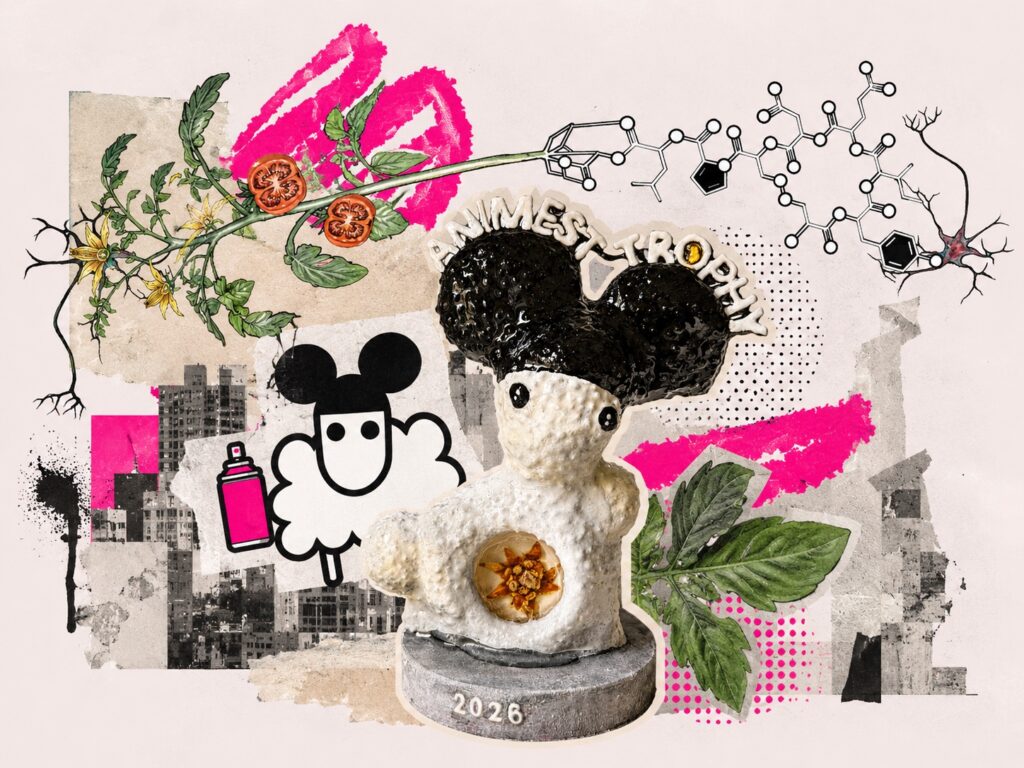
In the middle of the concrete jungle, nature comes back into focus – not as scenery, and not as nostalgia, but as a reminder that no one exists alone.
Plant Intelligence & the Animest.21 Trophies
We often speak about nature as if it were somewhere else – outside the city, outside culture, outside us.
But we never really left it.
Plants are constantly sensing the world around them. They respond to light, gravity, touch, vibration, chemicals, danger and one another. A sunflower turns east before sunrise. A tomato under attack changes the chemistry of the air around it. An orchid cannot even begin its life without another organism.
This is where these trophies began.
I became fascinated by the idea that intelligence might not only be about thinking, but about paying attention – sensing what surrounds you, responding to change, knowing when to adapt, when to connect and when to depend on others.
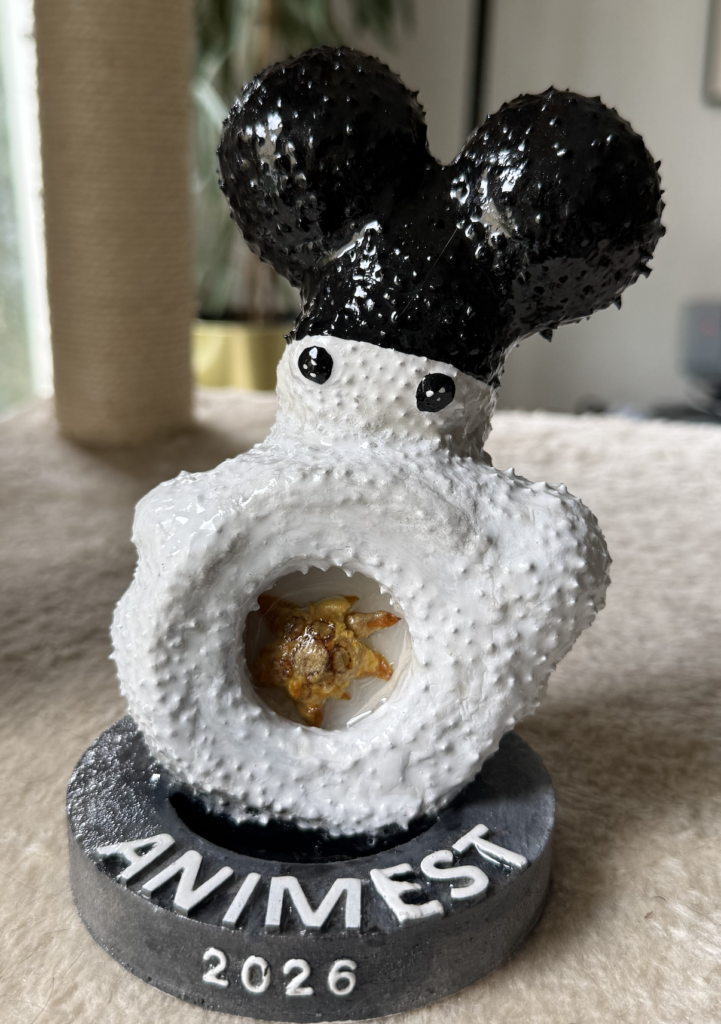
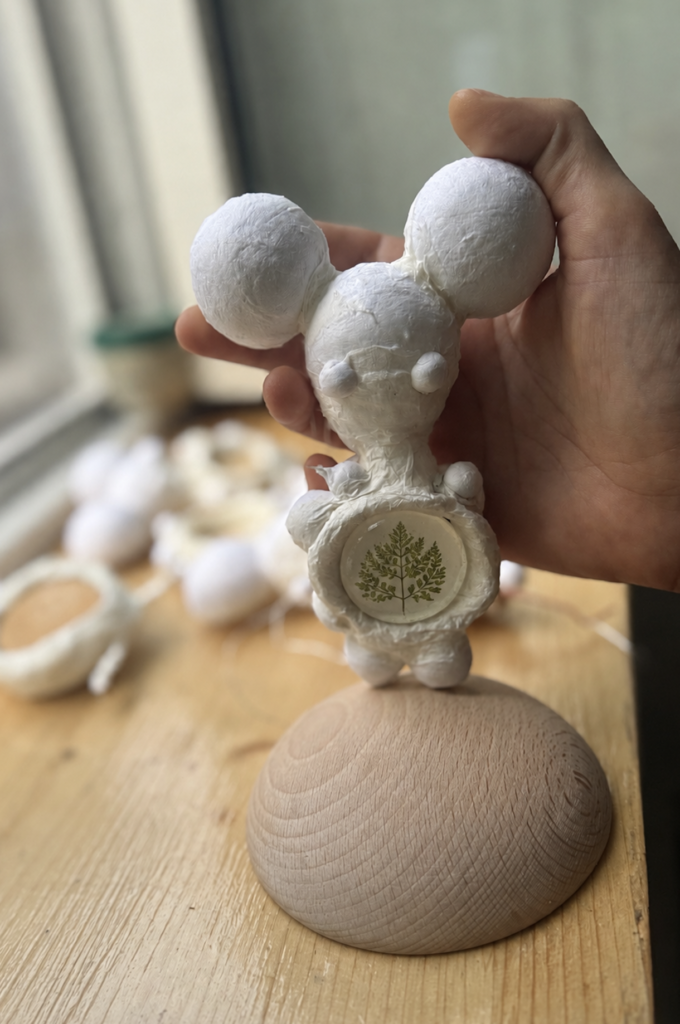
Each Animest.21 trophy holds a real botanical specimen connected to a documented scientific story. The plants are not decorations. They are tiny witnesses to another way of living.
And together, their stories begin to feel strangely familiar.
They speak about vulnerability, communication, support, anticipation, dependence and survival. About the invisible relationships that allow any individual to exist.
Perhaps plants are not interesting because they are like us.
Perhaps they are interesting because they remind us of something we have forgotten:
we are nature too.
THE BOTANICAL STORIES
1. ANIMEST TROPHY
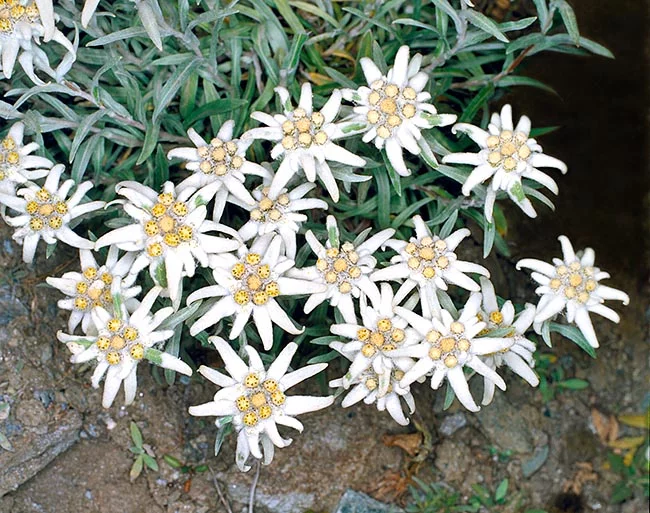
Edelweiss – floare-de-colț – survives high in the mountains, exposed to intense sunlight, cold, wind and scarcity. What looks like soft white petals are actually leaves covered in microscopic hairs. Research has shown that their structure acts as a natural photonic shield, absorbing damaging ultraviolet radiation before it reaches the living tissue beneath.
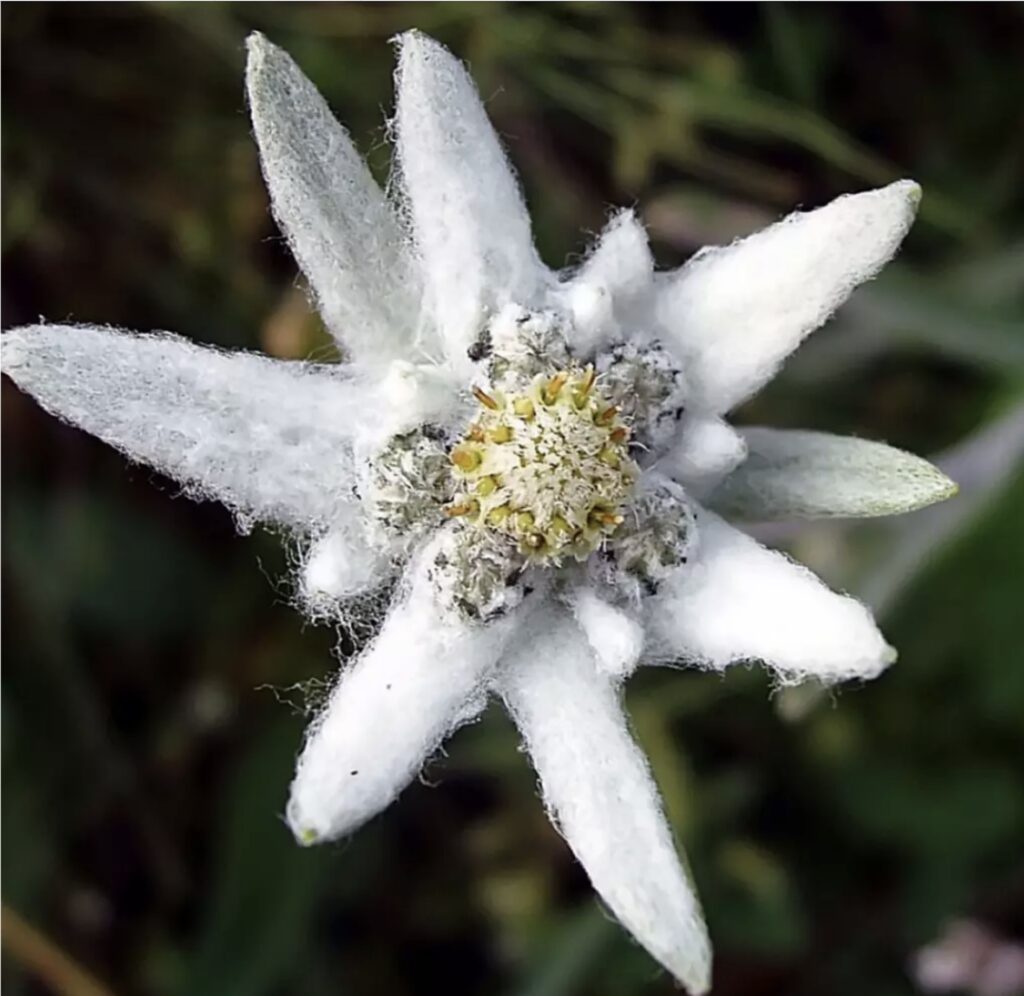
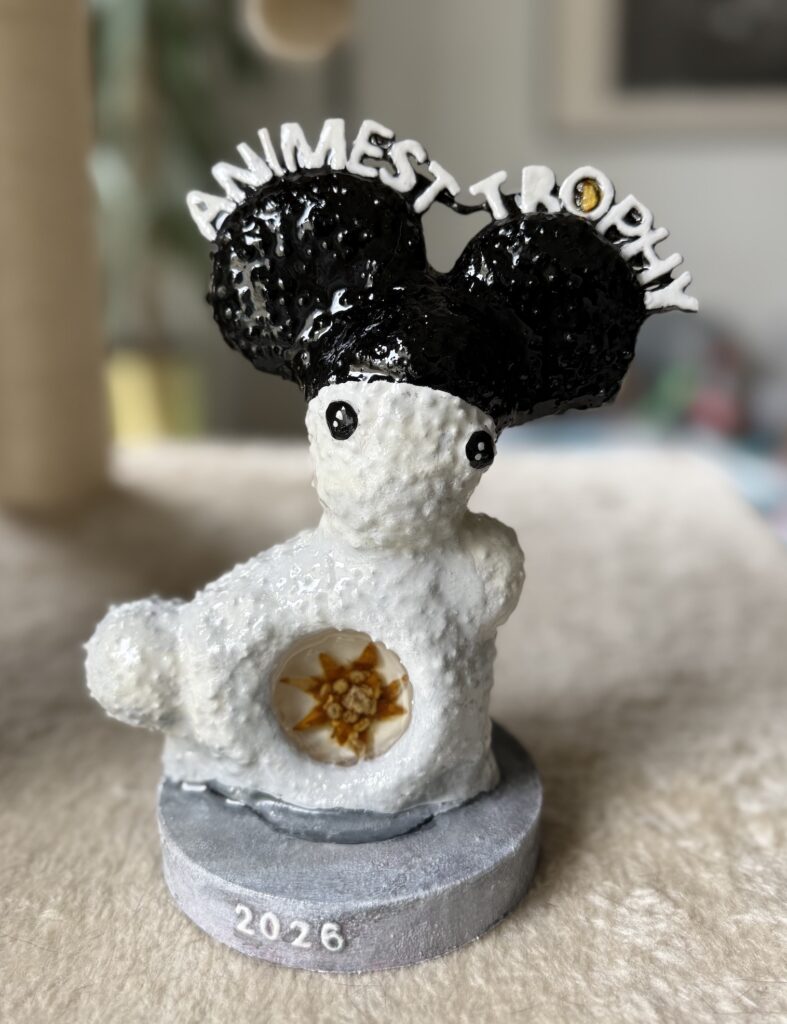
Its softness is not weakness. It is a form of protection.
Deeply connected to the Carpathian landscape, the flower also echoes the way Romanian culture has transformed nature into ornament, pattern and memory.
For Animest, entering a new cycle after 21 years, edelweiss becomes a symbol of resilience without hardening: the ability to remain delicate while adapting to difficult conditions.
“Survival is not always about becoming harder. Sometimes it is about learning what to let through.”
2. BEST ANIDOC
TOMATO – THE ALARM
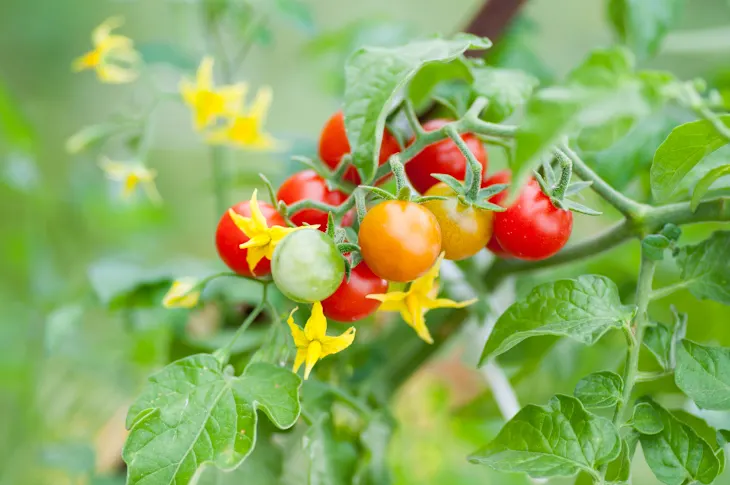
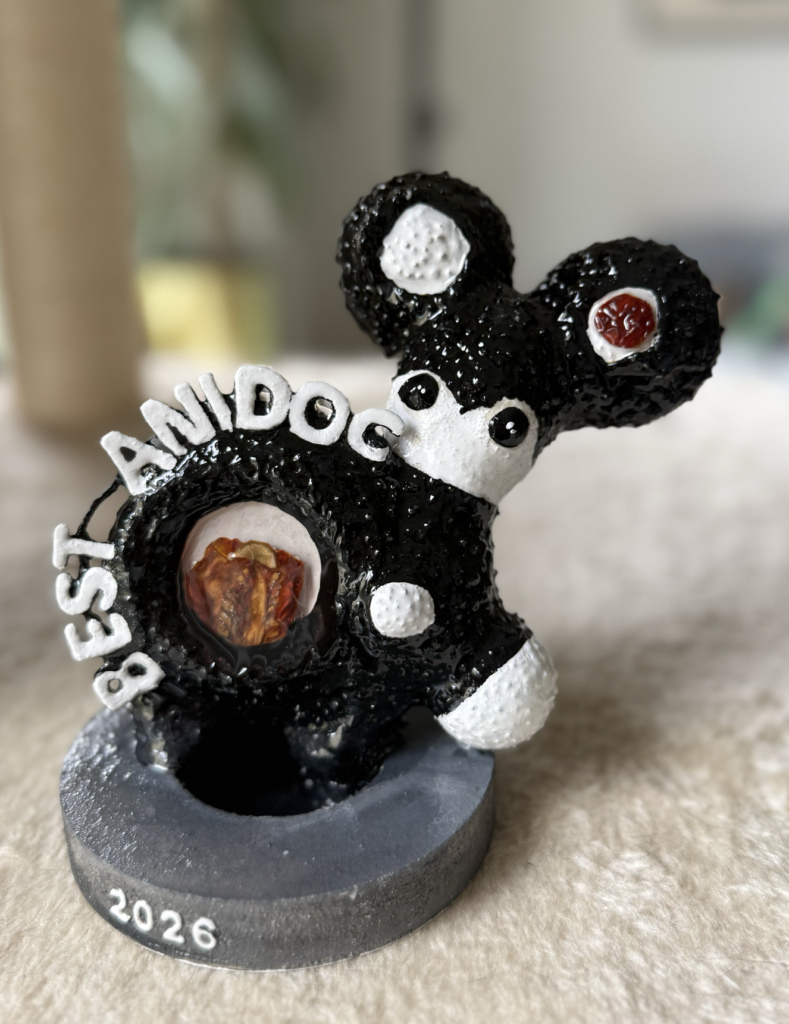
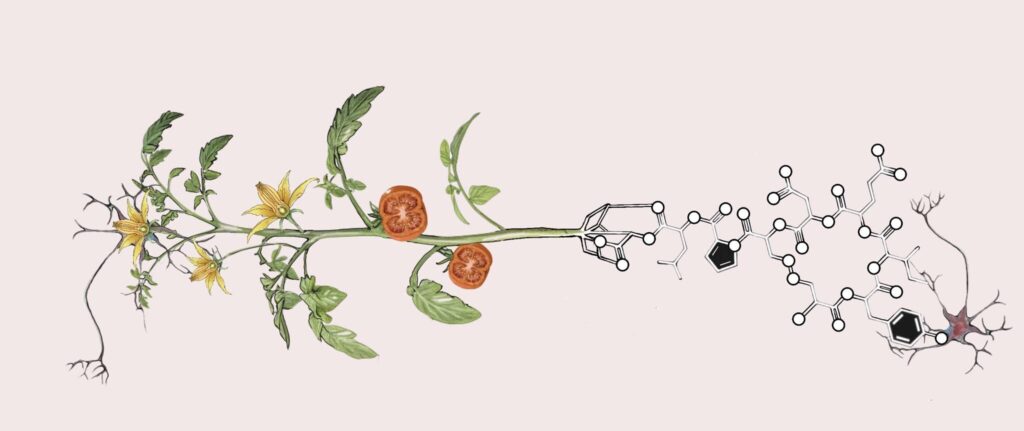
When tomato plants are attacked by caterpillars, their airborne chemistry changes.
Neighbouring tomato plants can receive some of this chemical information.
One particularly beautiful experiment showed that neighbouring tomatoes can absorb the airborne compound (Z)-3-hexenol released in association with herbivore attack and transform it into a defensive glycoside.
The neighbouring plant therefore changes its own defence chemistry in response to information coming through the air.
Herbivore-induced plant odours can also become information used by the natural enemies of herbivores, including parasitoid insects.
ecologically something extraordinary happens:
one organism is attacked → its chemistry changes → information enters the environment → other organisms respond.
HUMAN BRIDGE
“A warning becomes protection when others can hear it.”
3. BEST STUDENT FILM
LILY OF THE VALLEY – THE MANY
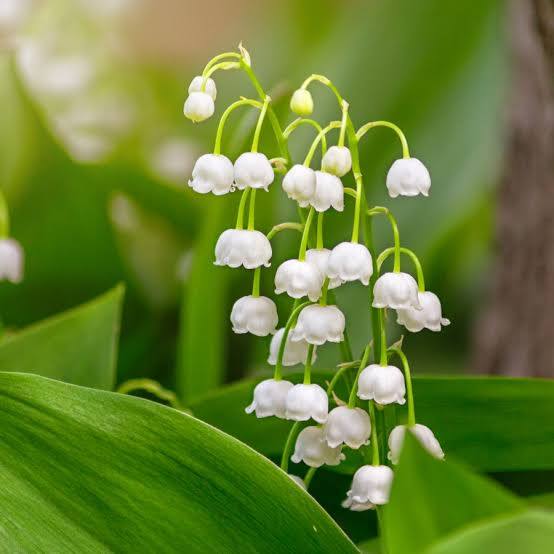
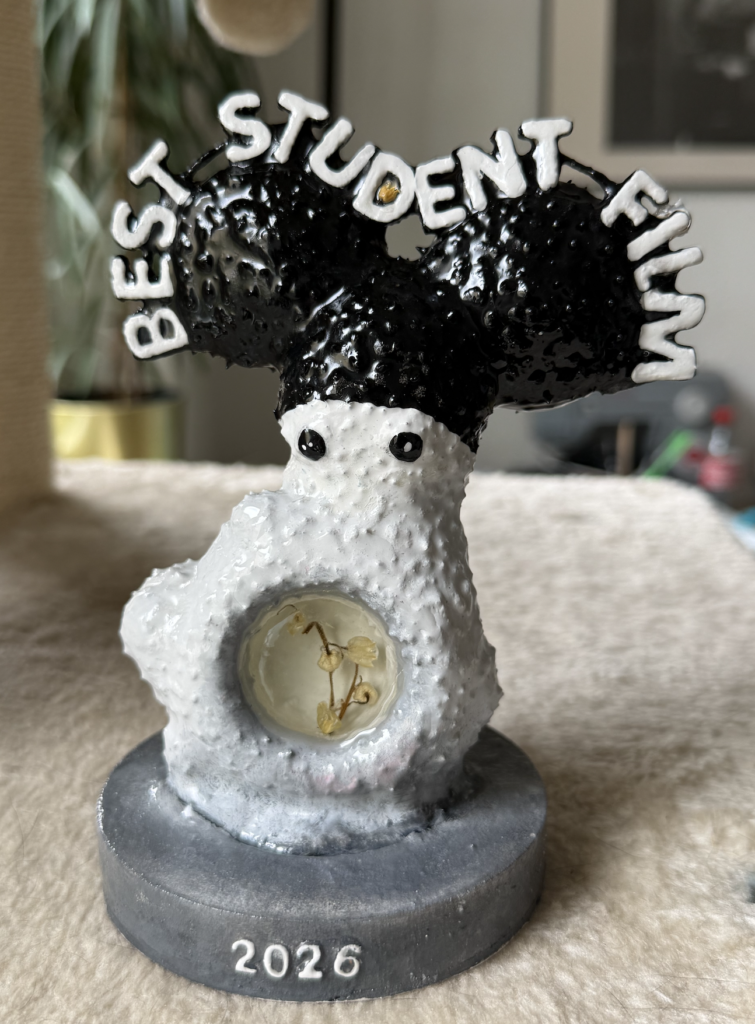
Lily of the valley spreads underground through rhizomes. What looks like a whole group of separate plants above the soil can actually be one genetic individual repeated many times.
But there is a beautiful contradiction: Convallaria majalis is self-incompatible. A clone can spread and persist on its own, but to reproduce sexually it needs pollen from a genetically different individual. In populations with extremely low genetic diversity, fruit production can become very low or disappear altogether.
HUMAN BRIDGE
“We can grow alone. To create something new, we need others.”
4. BEST FEATURE FILM
ROSEBUD — THE OPENING
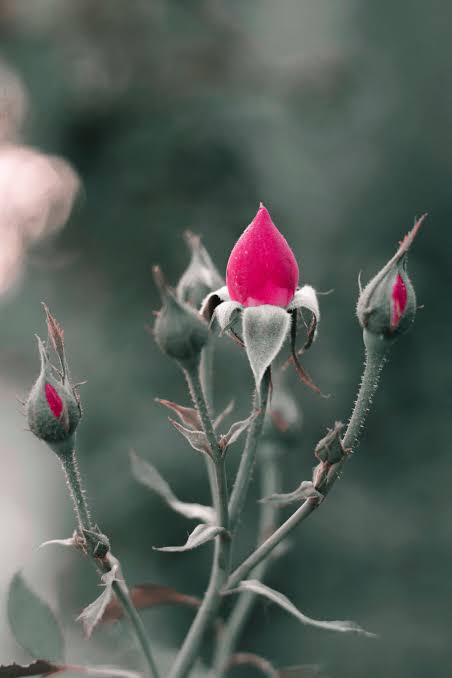
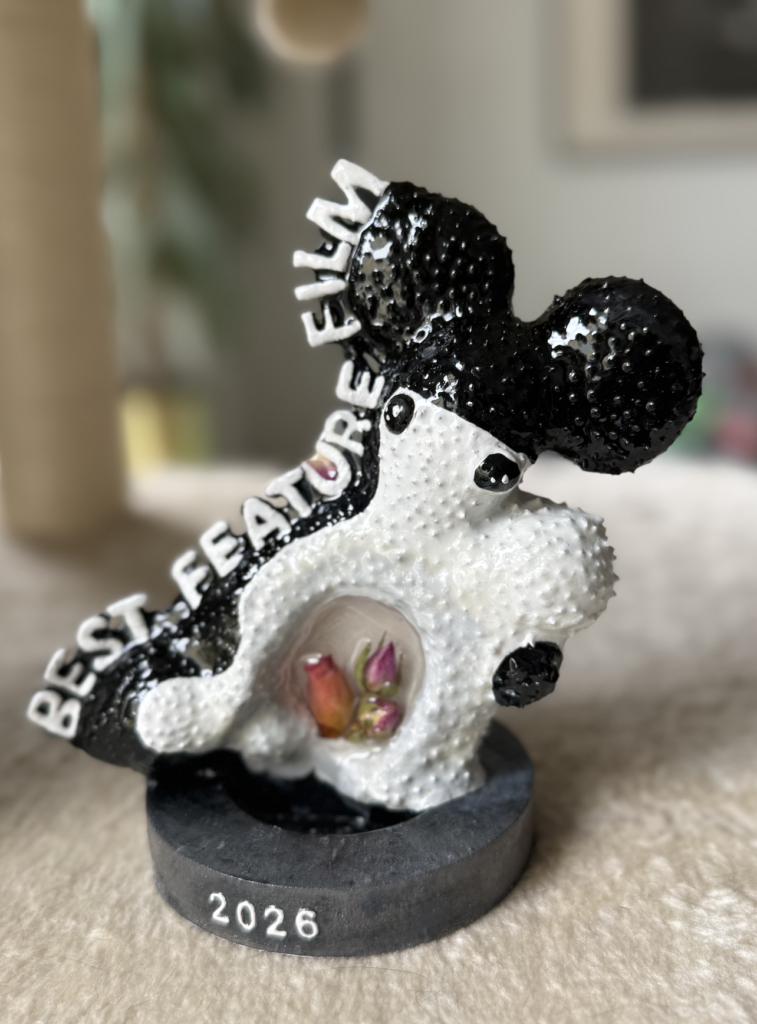
Research in cultivated roses shows that flower opening is not simply petals becoming loose.
It is an active, regulated transformation.
Cells at the base of the petals expand asymmetrically.
One side grows differently from another.
That unequal growth creates curvature, and the petals move outward.
The flower becomes visible through an internal process of transformation.
HUMAN BRIDGE
“Every opening begins from within.”
For a feature film, I like the idea that an entire world begins closed.
Over time, characters, images, histories and relationships unfold.
5. BEST ROMANIAN FILM
SUNFLOWER – THE ANTICIPATION
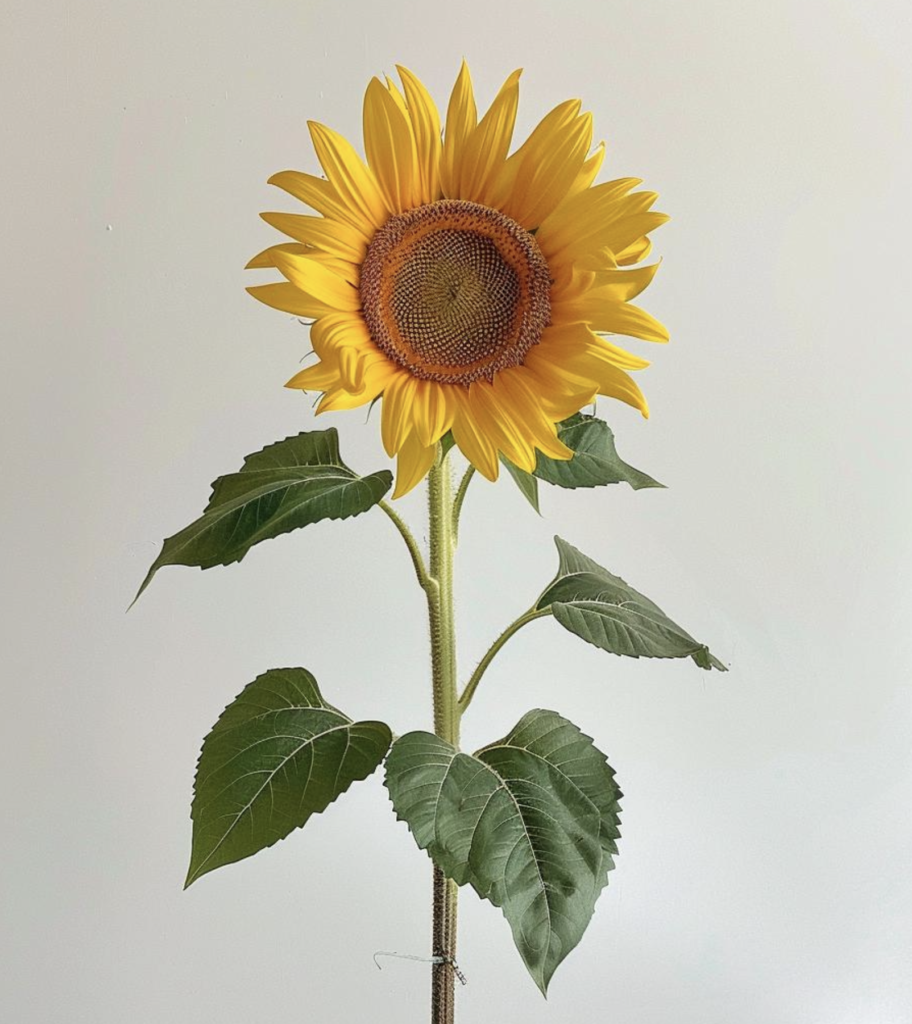
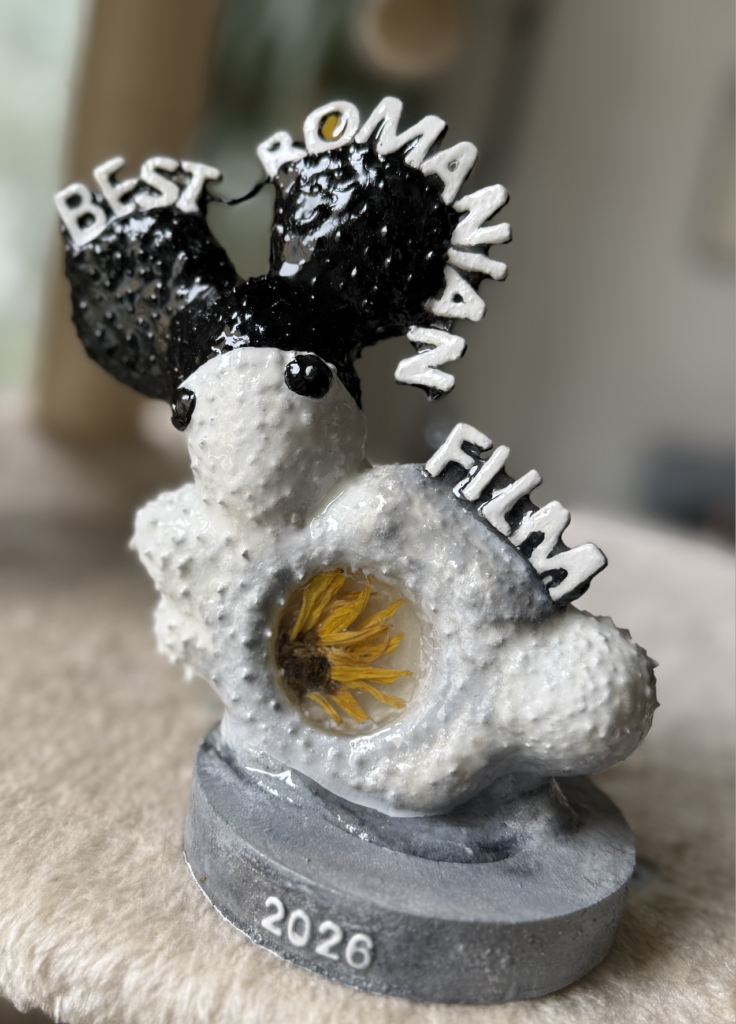
We often say that sunflowers follow the sun.
But the more interesting part happens when there is no sun to follow.
Young sunflowers track the sun from east to west during the day.
Then, during the night, they reorient toward the east.
By morning, before sunrise, the plant is already facing the direction from which the sun will appear.
Research shows that this behaviour involves the plant’s circadian clock together with directional growth.
The sunflower is therefore not simply reacting to light in the present.
Its biology has become synchronized with a repeating environmental rhythm.
HUMAN BRIDGE
“Sometimes we turn toward the light before we can see it.”
For Romanian film, that sentence has another meaning for me.
Making art – particularly during uncertain conditions – often requires orienting yourself toward something that does not exist yet.
You work toward the possibility of light before you have proof that it will arrive.
6. AUDIENCE AWARD
STRAWBERRY – THE CONNECTION
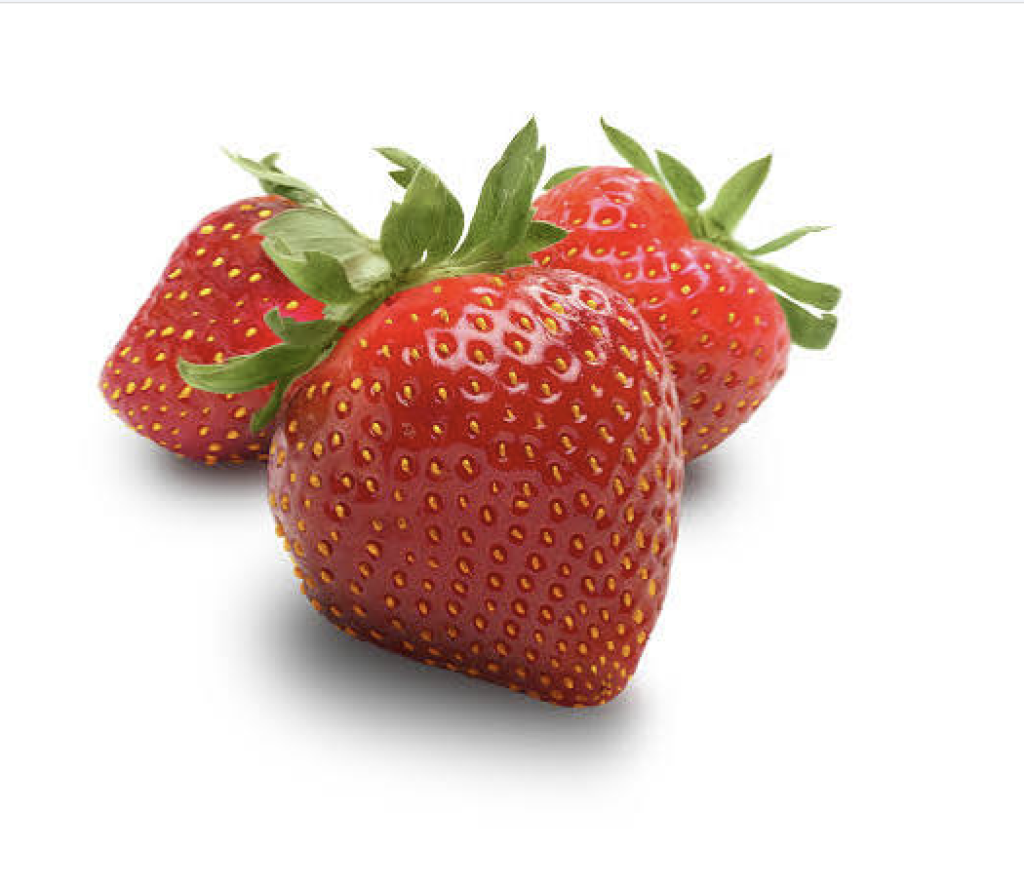
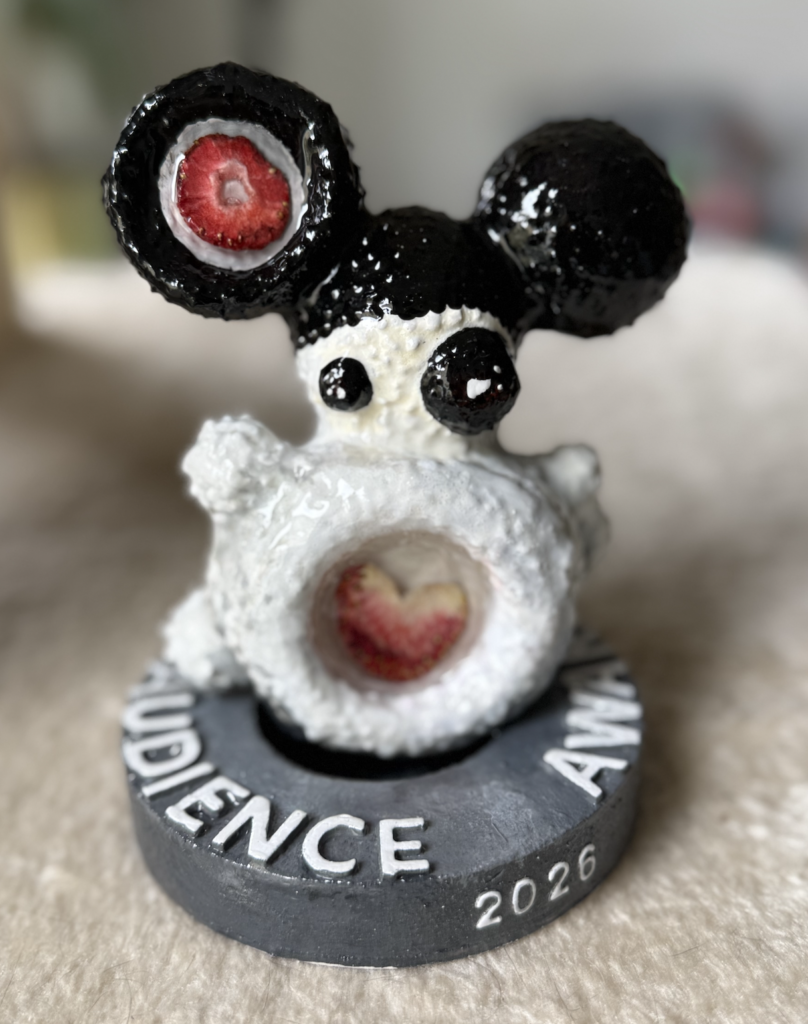
A strawberry plant can produce new plantlets through runners called stolons.
These apparently separate plants – or ramets – can remain physically connected.
And those connections are functional.
Resources such as water, carbon and nutrients can move between connected parts of the clone.
Experiments with Fragaria chiloensis showed that under conditions such as drought and shade, remaining connected could support ramets that would fare much worse when isolated.
So what appears to be a collection of individuals can also function as a connected physiological system.
HUMAN BRIDGE
“What connects us can keep us alive.”
This is why I like strawberry for the Audience Award.
An audience isn’t outside a cultural ecosystem.
Its attention, presence, conversation and memory are resources moving through that ecosystem.
A film without an audience still exists.
But culture survives through circulation.
7. BEST SHORT FILM FOR CHILDREN
DANDELION – THE RIGHT MOMENT
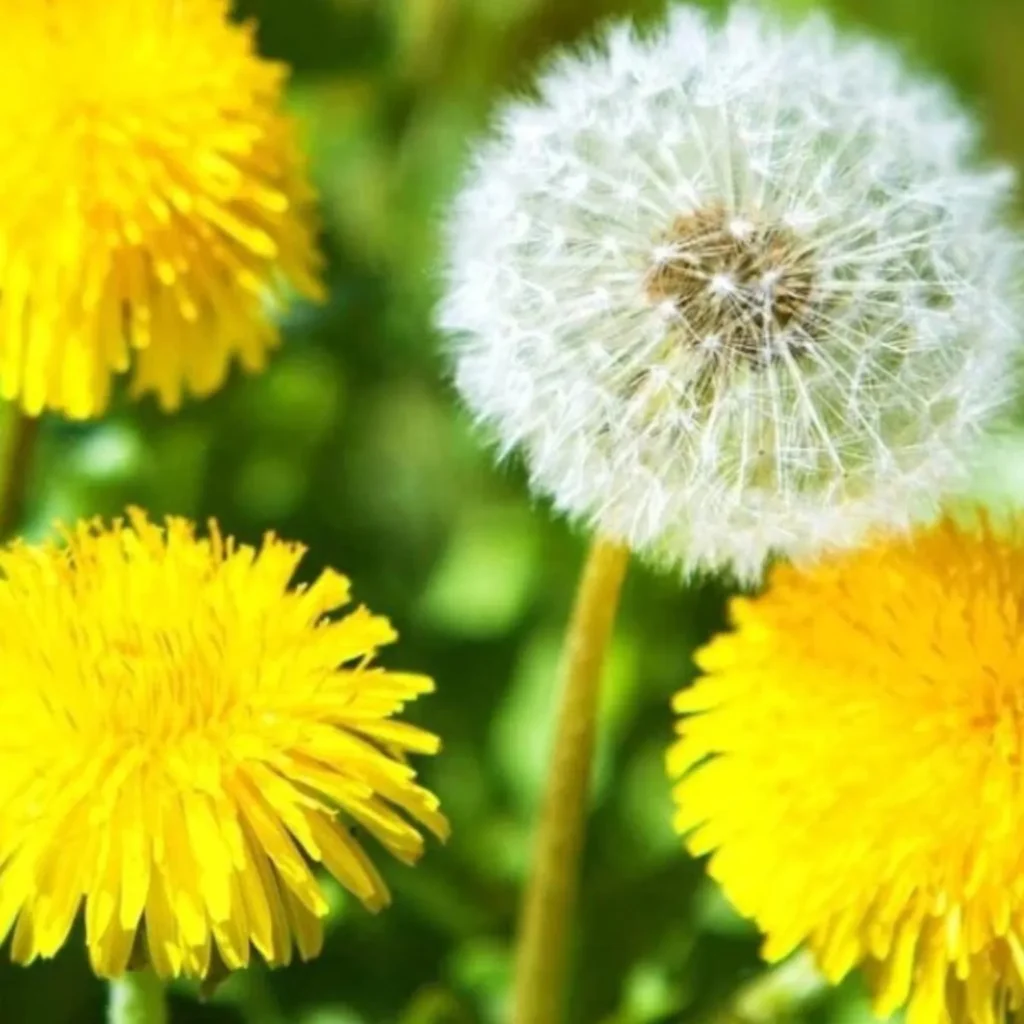
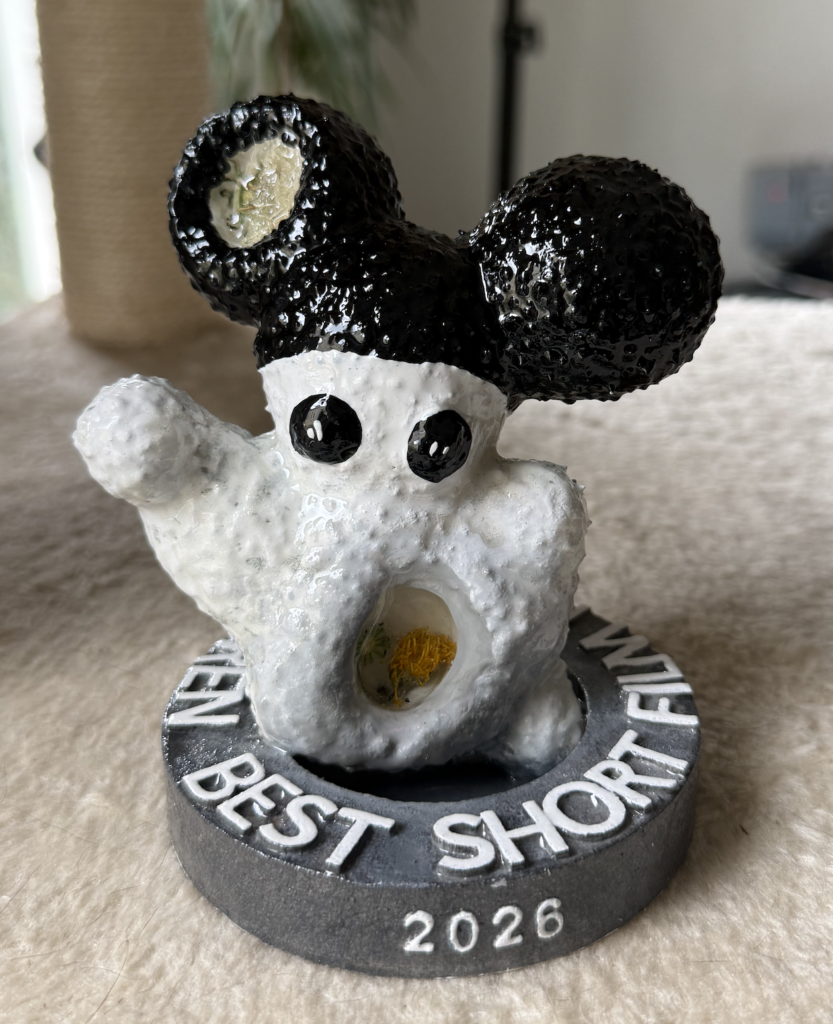
A dandelion seed does not simply have a beautiful parachute.
That parachute is responsive to the environment.
The structure called the pappus changes according to humidity.
In dry conditions, it opens.
In humid conditions, it closes.
This changes the aerodynamic properties of the seed and influences dispersal.
And when the dandelion does fly, something even stranger happens.
Air moving through the fine hairs of the pappus produces a separated vortex ring above the seed.
This unusual aerodynamic phenomenon allows an incredibly light structure to travel efficiently through the air.
HUMAN BRIDGE
“Knowing when to let go is part of the journey.”
I like this for the children’s award because it remains playful.
Most of us remember blowing on a dandelion as children.
One breath suddenly animates dozens of tiny travellers.
But behind that familiar gesture is an extraordinarily sophisticated relationship between structure, air, humidity and timing
8. BEST VR FILM
PEANUT – THE OTHER DIRECTION
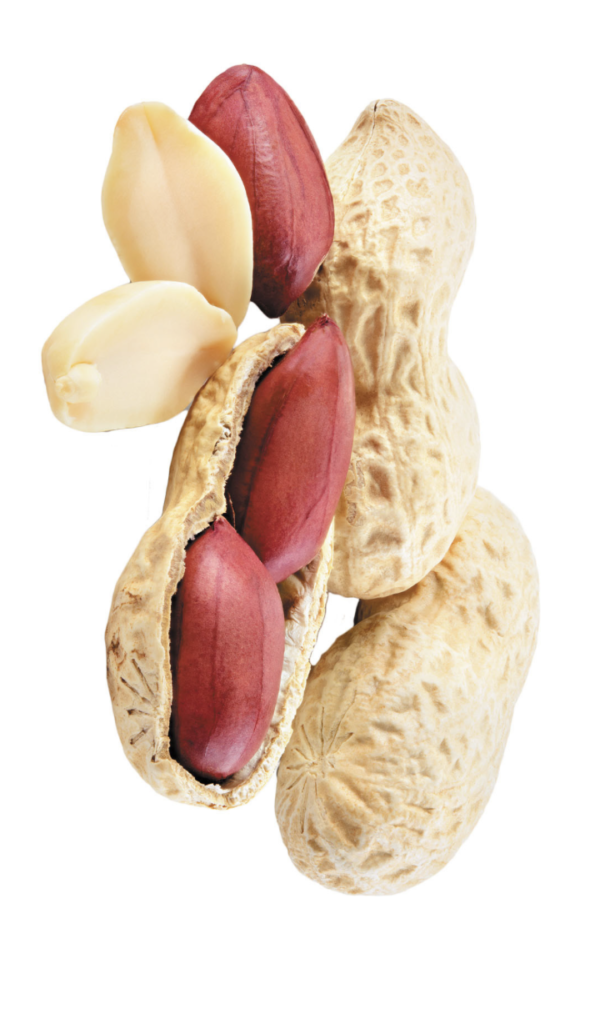
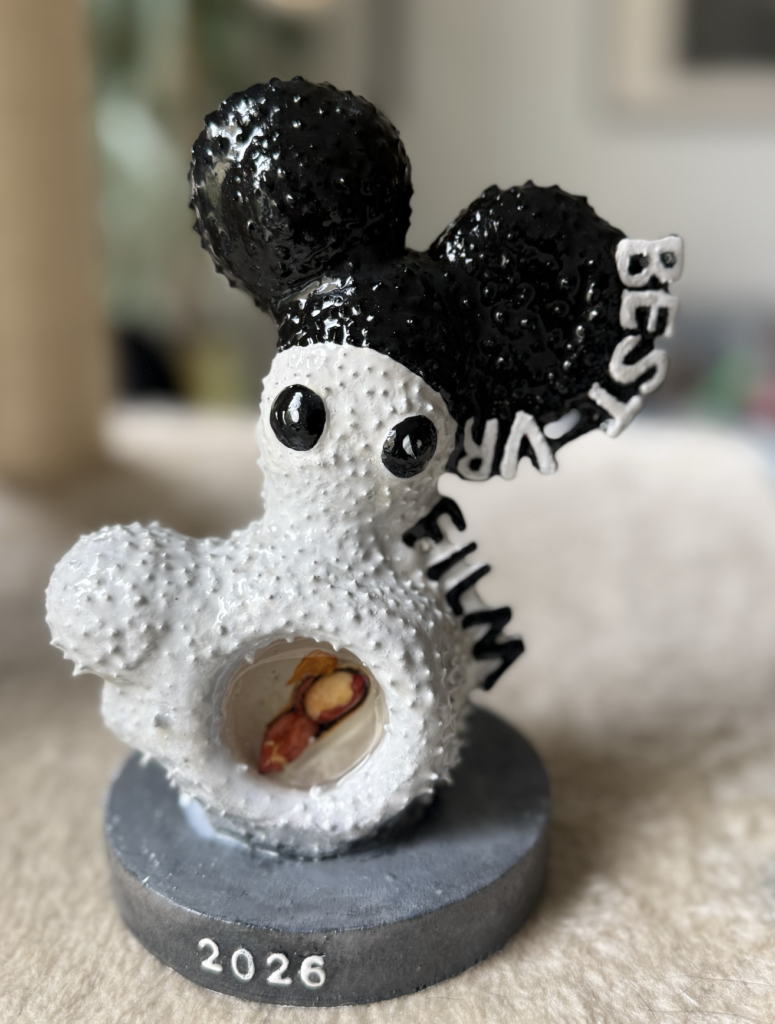
The peanut has one of the strangest reproductive journeys among familiar plants.
Its flower appears above ground.
It is fertilised above ground.
But afterward, a specialised structure called the gynophore, or peg, changes direction.
It grows downward.
It carries the developing ovary toward the soil and pushes it underground.
Normal pod development then proceeds beneath the surface, in darkness.
So the peanut’s reproductive journey moves from light into darkness.
From above to below.
From the visible world into an environment that initially seems like the wrong direction.
HUMAN BRIDGE
“Sometimes the right direction looks like the wrong direction.”
That feels especially appropriate for VR.
VR can destabilise orientation.
It can change where the body thinks it is.
It can question what is above, below, inside, outside, real or represented.
The peanut literally changes orientation in order to become what it is going to become.
9. BEST MUSIC VIDEO
ROSTOPASCĂ / GREATER CELANDINE – THE CARRIER
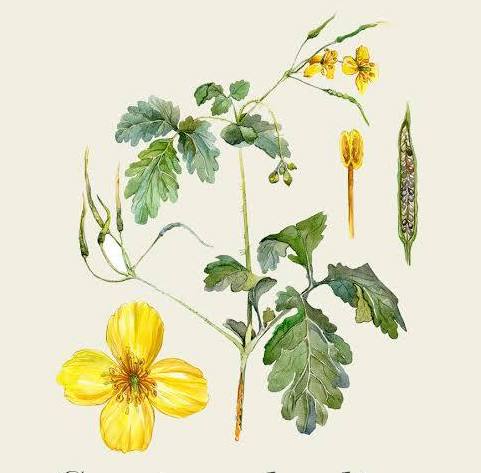
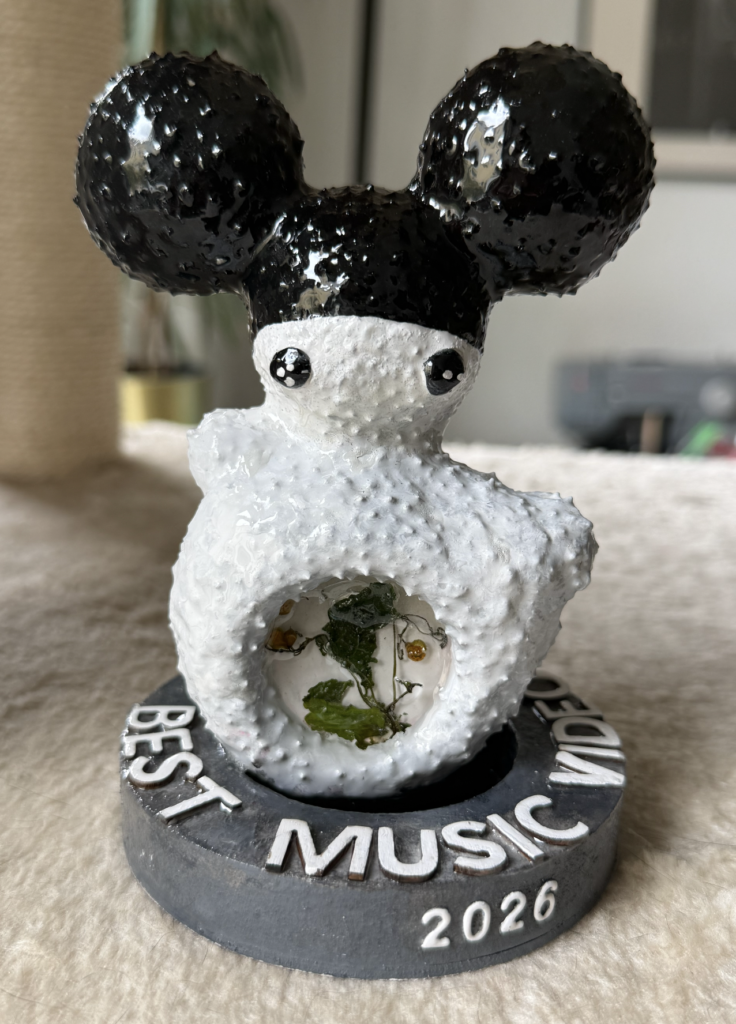
Greater celandine, Chelidonium majus, produces seeds with a nutrient-rich structure called an elaiosome.
Ants are attracted to these structures.
They collect the seeds and transport them.
The plant cannot walk.
But part of the movement of its next generation is performed by another species.
The seed travels because another body responds to it.
HUMAN BRIDGE
“Movement begins when something moves another.”
For Music Video, I like the double meaning.
A rhythm moves a body.
Music moves an image.
An image moves an audience.
And here a biological signal and reward literally cause another organism to perform movement.
MAKING OF
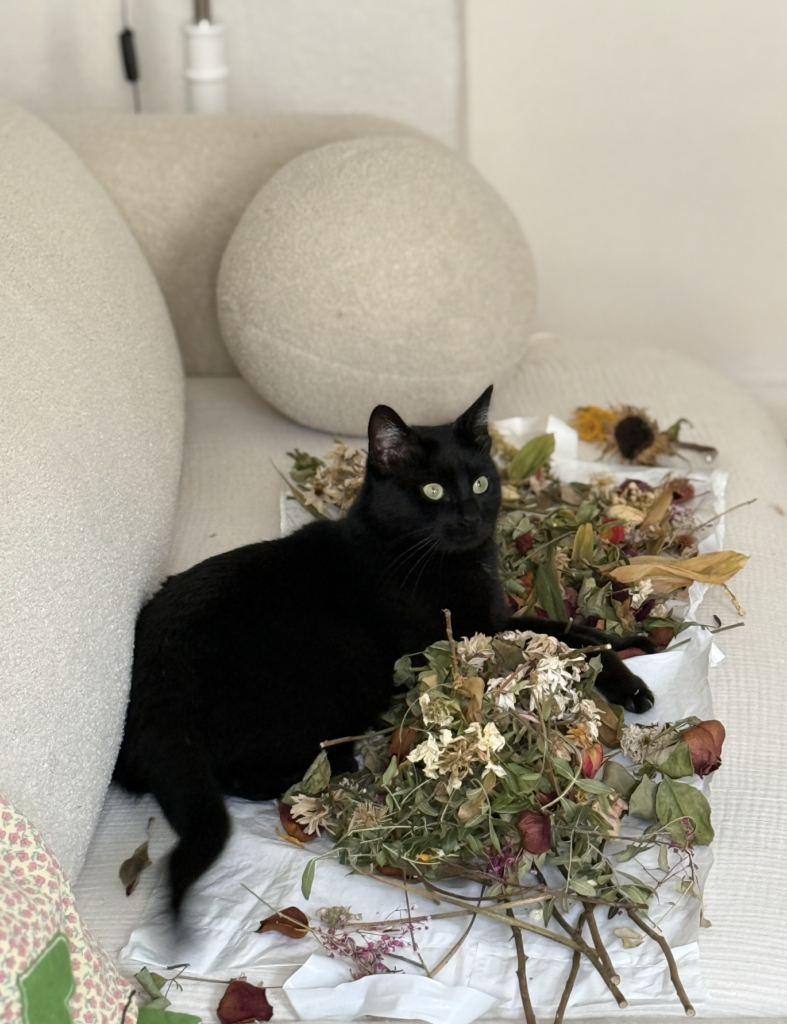
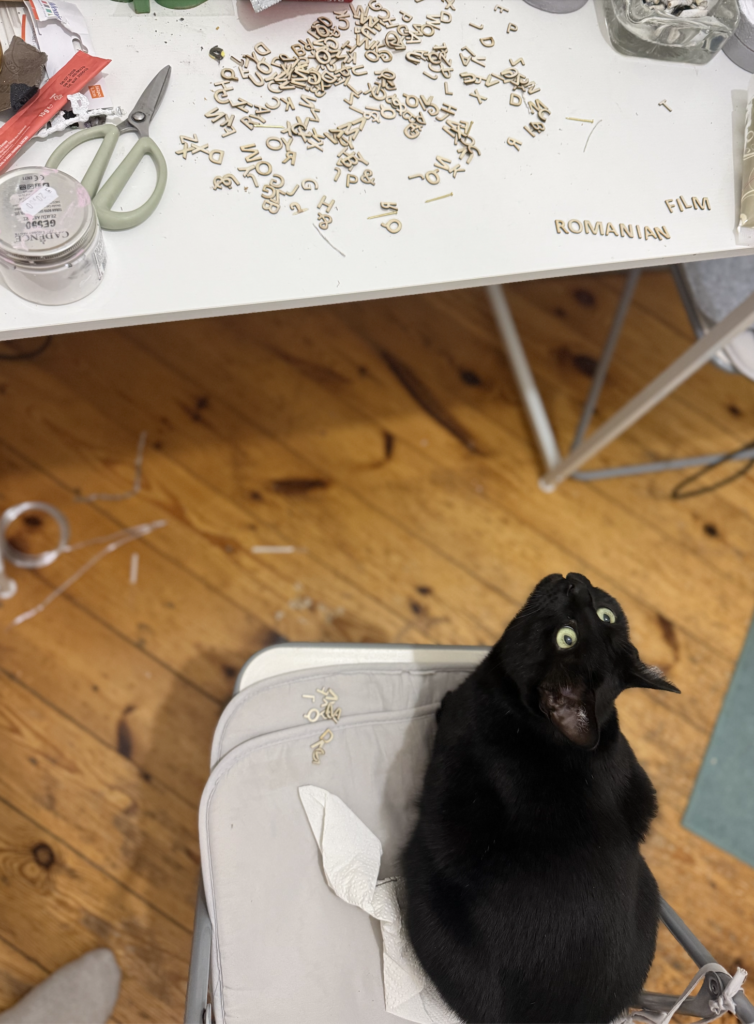
Special thanks to Anas, Diana, Stefan, Ioana, Stefi, Vivi, Roxana, the Animest team, and Lolek – the black cat – for helping bring this strange and beautiful bridge between nature, science, art, and community to life, and, not least, for the emotional support 🙂
The trophies are made from mycelium paper, cellulose, cement, 50% bio-based resin, and natural plant specimens gathered from several sources across Europe, mostly from Romania.
Working with living and natural materials also meant accepting the unknown: things grew differently than expected, cracked, changed, refused to behave, and occasionally failed very visibly. But perhaps that is part of the point. When you build with nature, you are never completely in control – you collaborate, negotiate, improvise, and sometimes let the imperfections become part of the final sculpture.
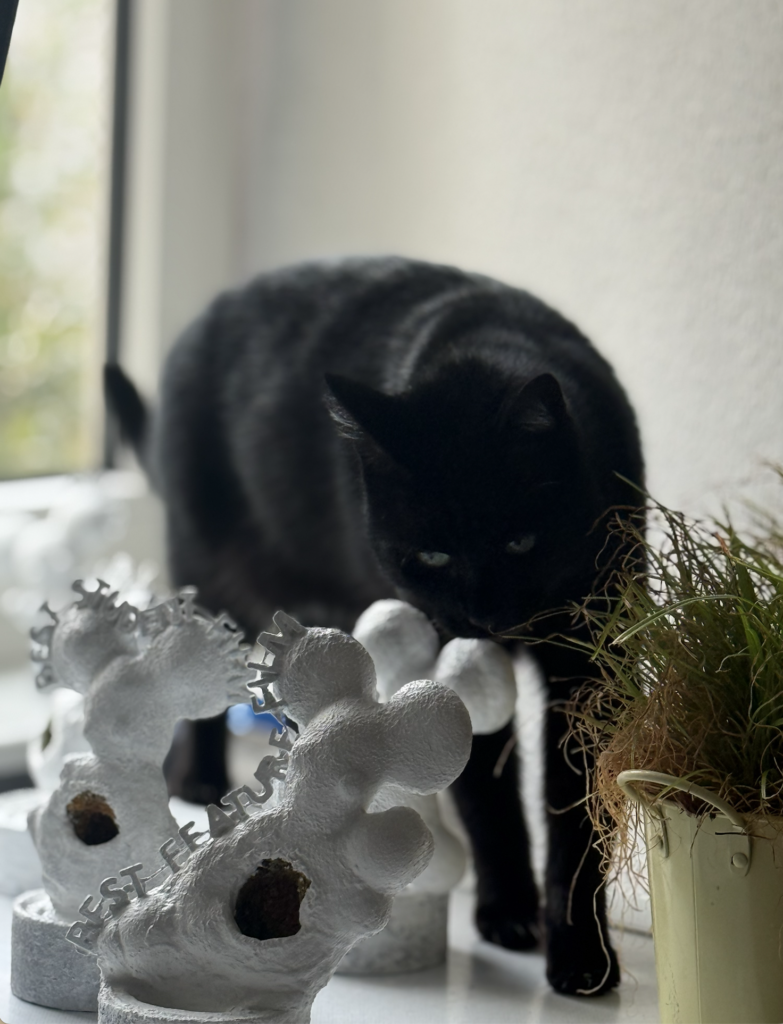
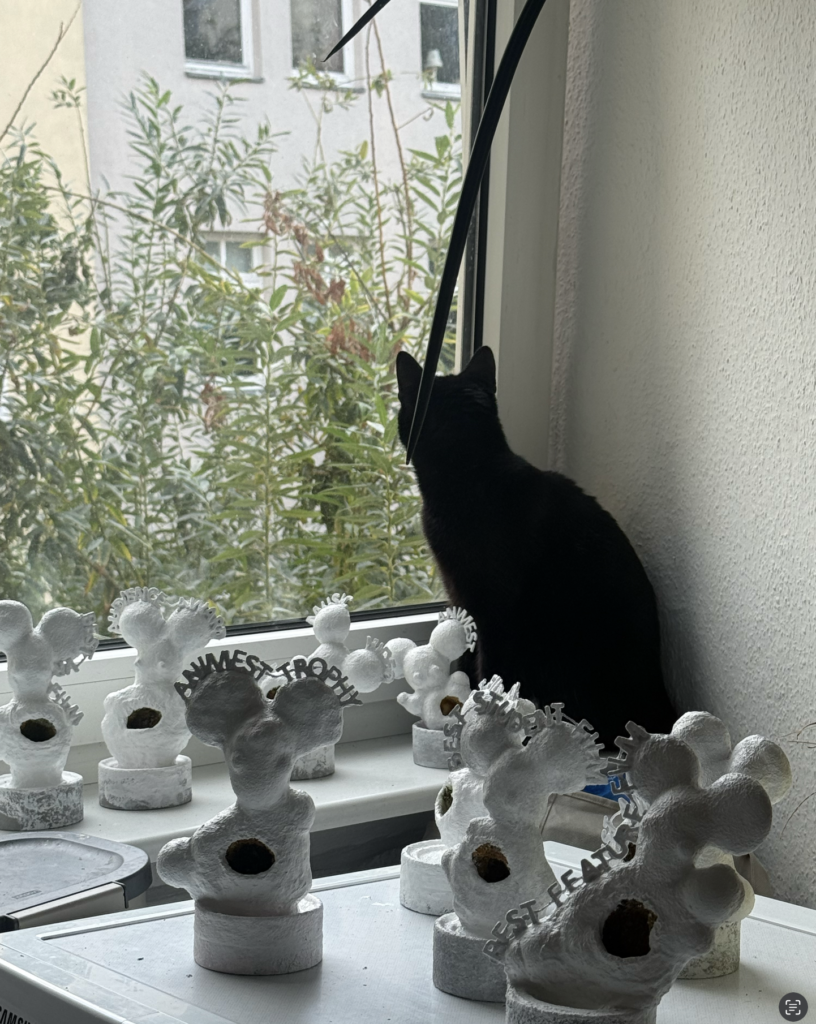
And congratulations to Animest for its resilience – for continuing to grow and survive even through difficult conditions – and to all the artists, participants, and winners who are part of this living ecosystem.
with love,
CRISTINA MILEA
@sarlatan.ro